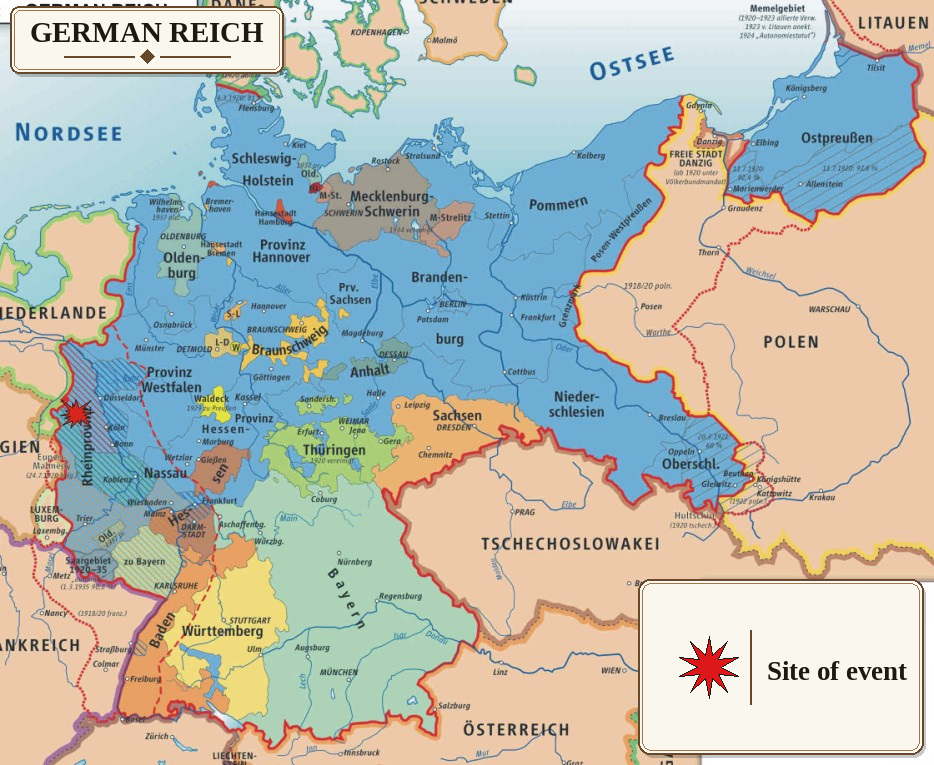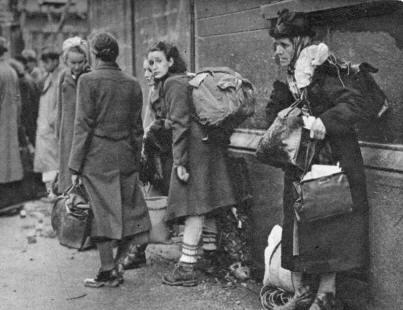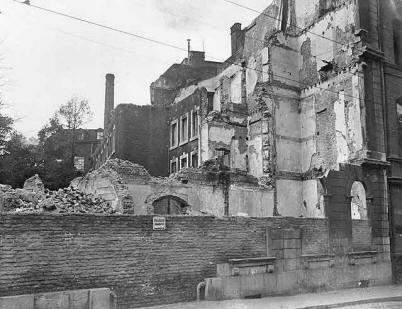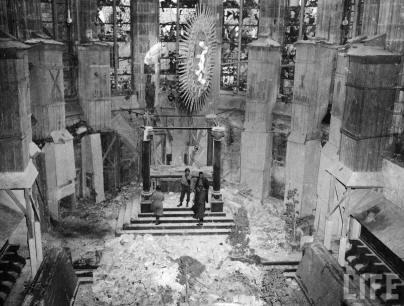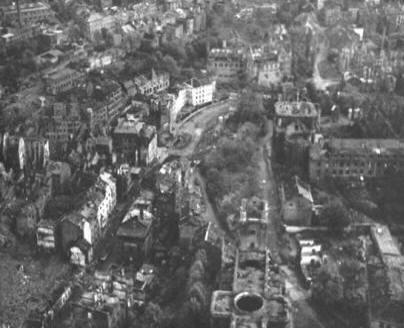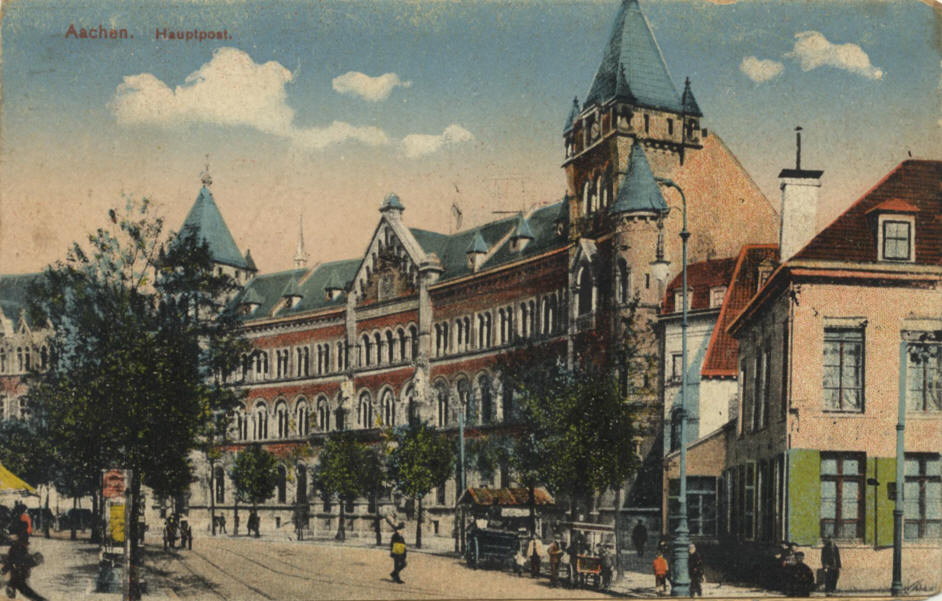
Aachen, a major city near the Dutch and Belgian borders that had escaped wartime destruction for much of its history, was attacked relatively early, in the spring of 1940.
The bombing raids grew steadily more intense over the following months and years.
The most serious attacks took place on
8 December 1941,
14 July 1943,
24 December 1943 (Christmas Eve) and
12 April 1944.
The July 1943 raid, involving 374 bombers and causing nearly 300 deaths, was particularly severe, as were the attacks of December 1943 and April/May 1944.
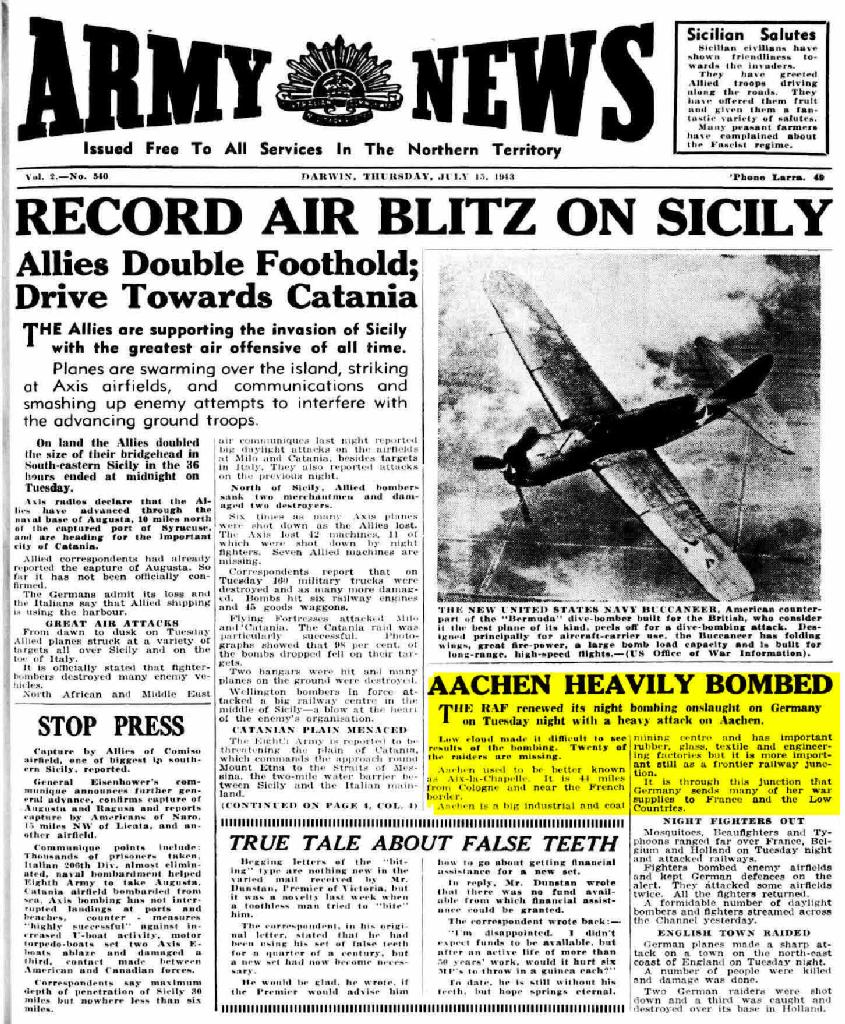
Australian military newspaper reporting on the bombing of Aachen
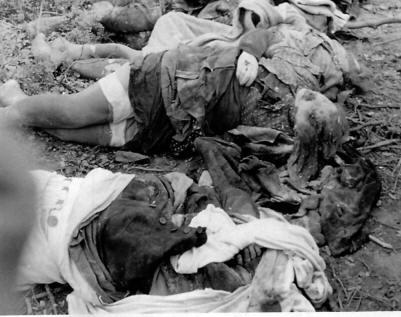
On 12 April 1944, 42,800 incendiary bombs and 4,047 high-explosive bombs struck Aachen, killing 1,525 people, including 212 children.
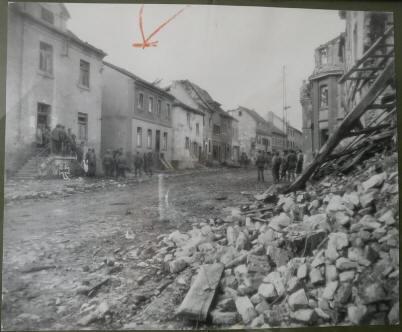
The cathedral, the Imperial Palace and many other cultural monuments were destroyed. Including the suburbs, 65 per cent of the city was razed to the ground.
During the battle for the city in October 1944, the ruins were again subjected to heavy air and artillery attacks.
U.S. newsreel showing the capture of Aachen