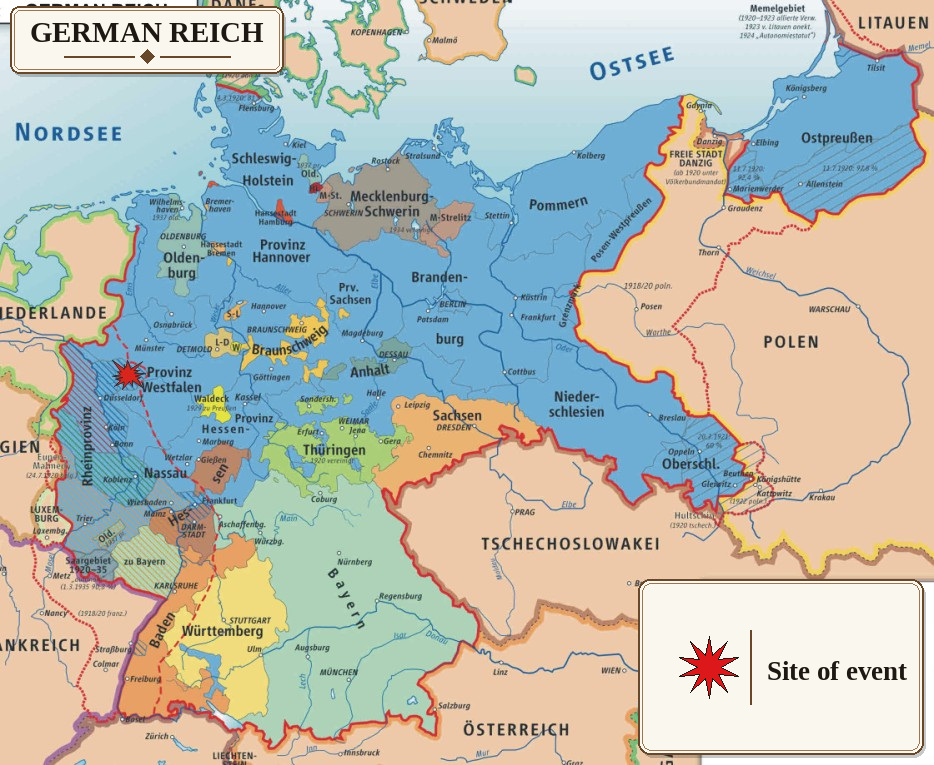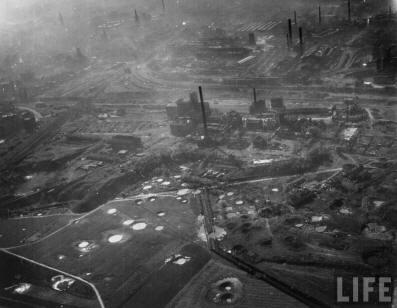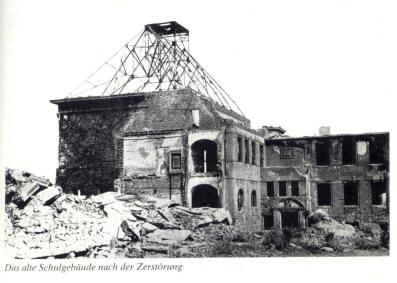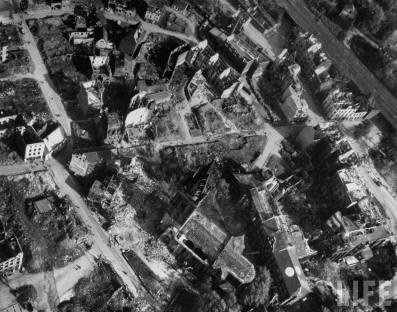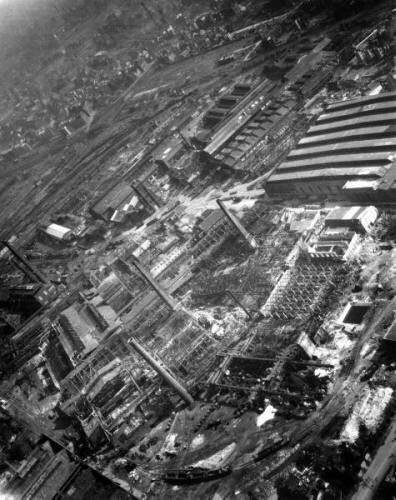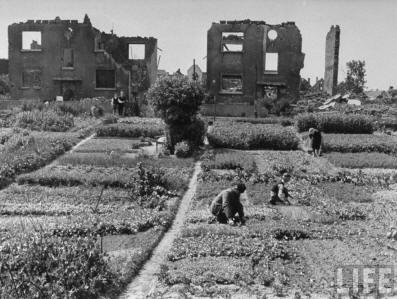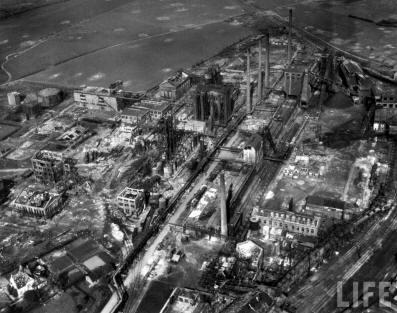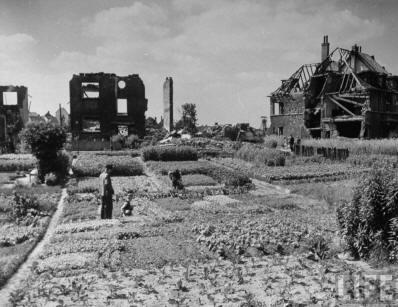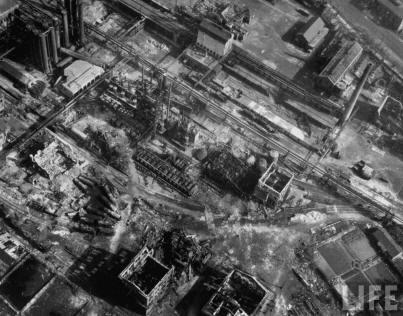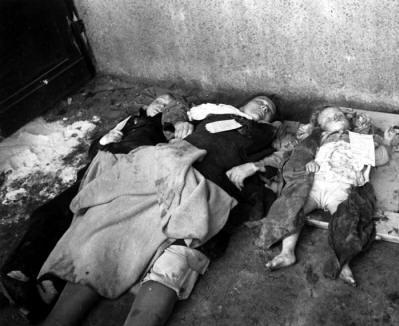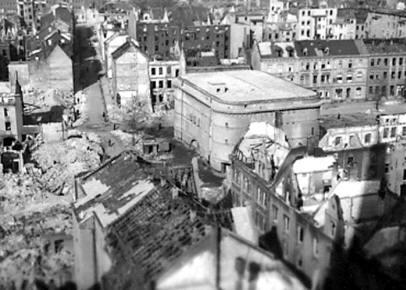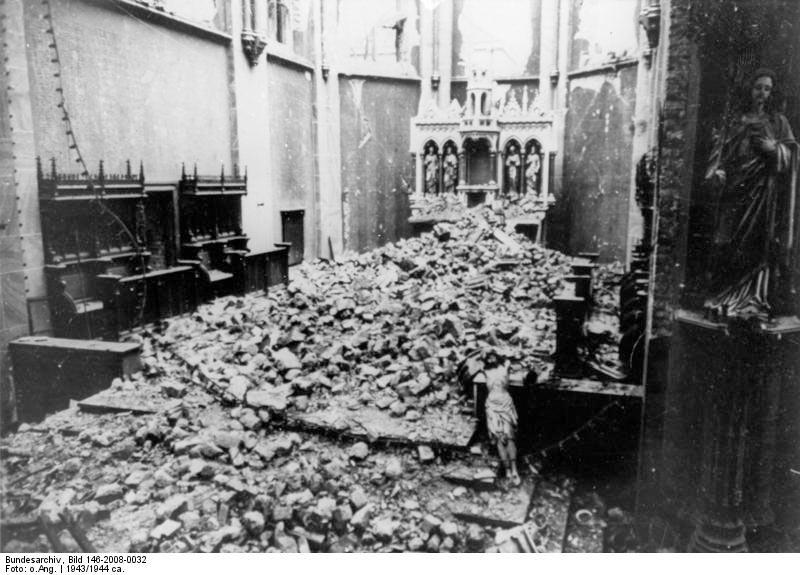
From the spring of 1943, as part of the so-called Battle of the Ruhr, Bochum was systematically attacked in a series of major raids. At the Casablanca Conference, the Allies designated the Ruhr as a top-priority target. The stated objective was to destroy the “arsenal of the Reich”; in practice, however, the city centre and residential districts were also heavily bombed.
From the autumn of 1944, the already devastated urban area of Bochum was subjected to further carpet bombing.
The most serious attacks took place on:
30 March 1943 — 157 bombers, 28 dead
14 May 1943 — 142 bombers, 429 dead
13 June 1943 — 503 bombers, 540 dead
26 June 1943 — 473 bombers, 157 dead
5 October 1944 — 157 bombers, 28 dead
30 March 1943 — 994 dead during the “Hurricane” operation against the Ruhr cities.
Another bomb attack took place on
4 November 1944.
Two-thirds of the city of Bochum was destroyed.
A particularly tragic episode involved young people and mothers with small children evacuated from Bochum in March 1945 for protection from the bombing. Their train was attacked by Allied fighter-bombers at Soest railway station. Of the 108 passengers, 32 were killed and 76 wounded.