Flight and expulsion from Eastern Europe
Until 1945, large German-speaking minorities lived across Eastern and South-Eastern Europe. War, deportation, expulsion, population transfers and post-war violence brought many of these centuries-old communities to an end.
According to the figures presented here, around half a million ethnic Germans died in Eastern Europe and nearly 2.5 million were forced to leave their homes permanently.
560,000 dead
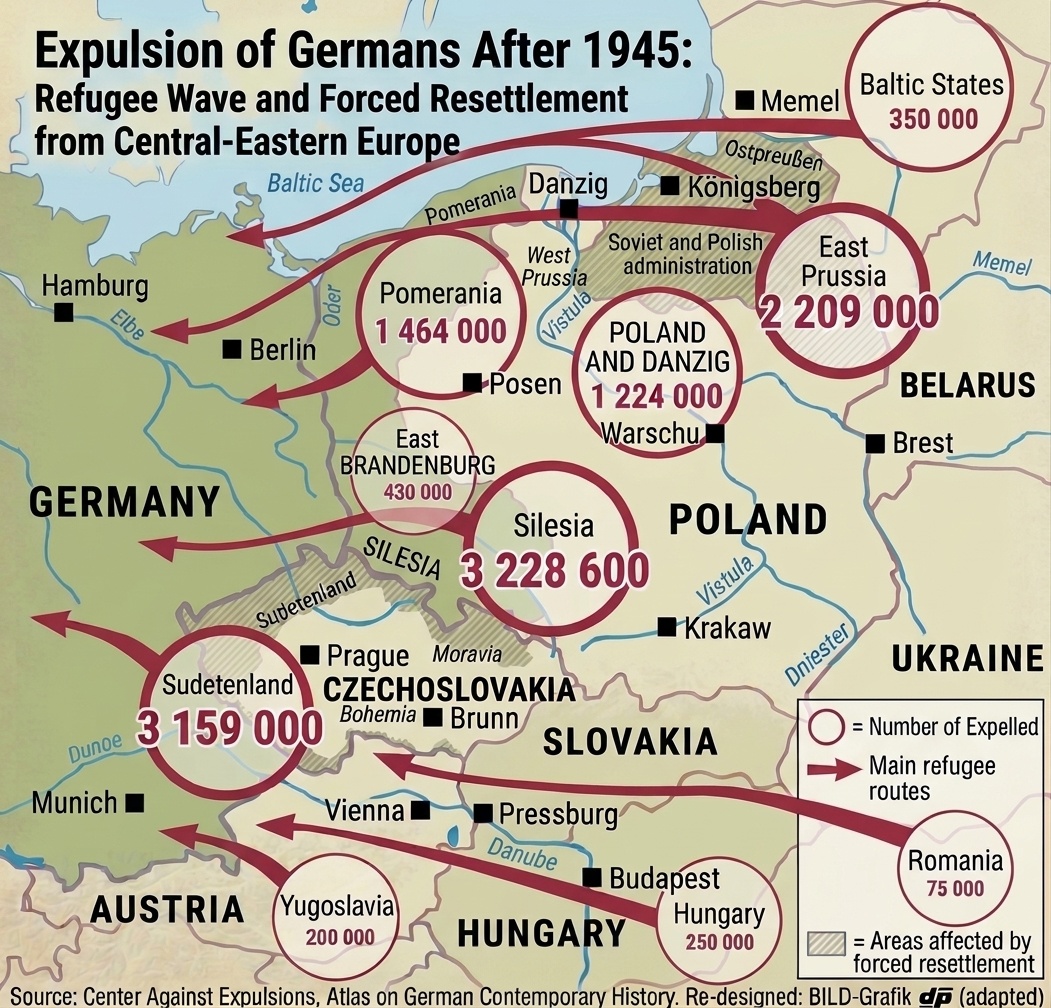
Major German-speaking populations displaced or expelled from Eastern Europe
Ethnic Germans in Poland
Towards the end of the First World War, the Second Polish Republic was re-established. Territories with substantial German populations became part of the new Polish state, while relations between Berlin and Warsaw were shaped by competing territorial claims and growing ethnic conflict.
From 1919 onwards, many Germans left territories transferred to Poland. The figures given here list about 100,000 departures from eastern Upper Silesia and Posen and a further 800,000 from West Prussia.
In 1939, western and northern parts of Poland — including areas incorporated into the Reich as Danzig-West Prussia and the Wartheland — came under German rule, while eastern Poland was occupied by the Soviet Union. Ethnic German families from eastern Poland, the Baltic states, Bessarabia, Bukovina and Dobrudja were resettled in annexed territories.
In 1945, as the Red Army advanced to the Oder-Neisse line, millions of Germans fled from territories east of the future border. Hundreds of thousands were also deported to the Soviet Union for forced labour.
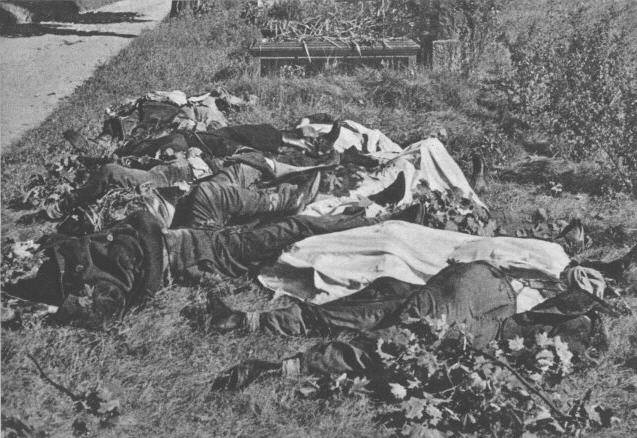
German civilians killed by Polish residents
Ethnic Germans in Hungary
From the mid-12th century onwards, Hungarian kings invited German settlers into the Kingdom of Hungary.
In the 18th century, after the Ottoman wars, large numbers of German-speaking settlers — later known collectively as Danube Swabians — moved into the Kingdom of Hungary.
They settled particularly in the region known as “Swabian Turkey”, in the Buda Hills and in the Bácska.
Population: 8,700,000 (1937), including approximately 500,000 Germans.
On 31 October 1918, Hungary became an independent state; under the post-war settlement it lost large territories to neighbouring states including Romania and Czechoslovakia.
Of the roughly 500,000 ethnic Germans in Hungary, only about 60,000 fled during the final phase of the war. Around 35,000 were deported to the Soviet Union for forced labour.
From 1946 onwards, about 170,000 ethnic Germans were expelled to the American occupation zone in Germany, mainly Württemberg, while approximately 50,000 were sent to the Soviet zone, especially Saxony.
Around 270,000 ethnic Germans remained in Hungary, thereafter living under the communist political system.
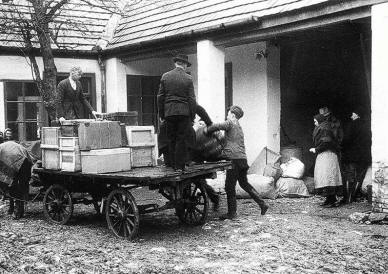
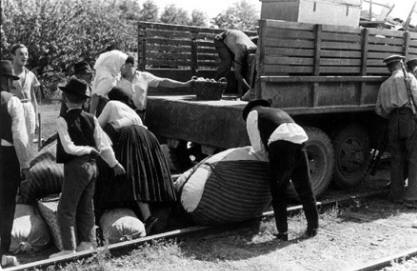
Expulsion of the German-speaking population from Hungary
Ethnic Germans in Yugoslavia
German settlers had lived in the Gottschee region, in present-day Slovenia, since the Middle Ages.
Settlement in the region was promoted by local rulers, particularly the Counts of Ortenburg and other Carniolan lords.
Settlers included farmers, craftsmen, miners and forestry workers; German-speaking communities also developed in several towns.
German-speaking communities also developed in the Bácska and Banat, especially from the 18th century onwards.
During the Habsburg resettlement of the 18th century, Danube Swabian communities were established across the Bácska and Banat.
After 1945, ethnic Germans in Yugoslavia suffered internment, displacement and severe deprivation. The figures presented here state that 135,000 of approximately 500,000 Germans died, many in camps from violence, hunger and disease.
About 30,000 ethnic German men and women were deported to the Soviet Union for forced labour. Around 290,000 displaced people crossed or were expelled into Austria and Hungary. The account states that only about 82,000 Germans remained in Yugoslavia.
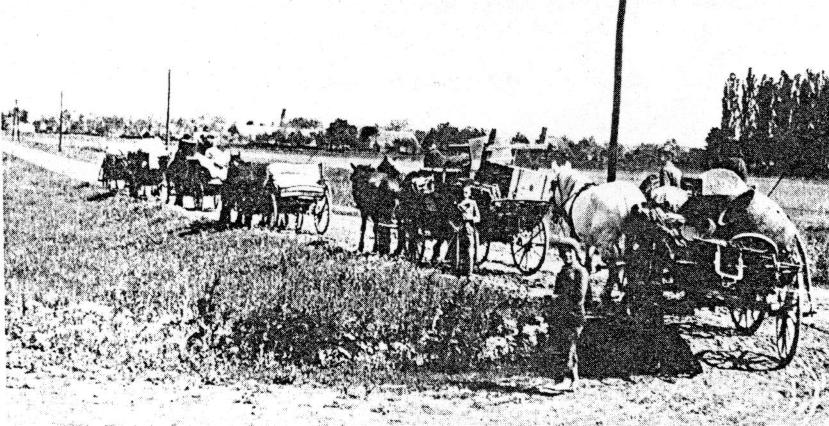
Germans fleeing the Bácska
Ethnic Germans in Romania
In present-day Romania, the first major German-speaking settlement was that of the Transylvanian Saxons, invited by Hungarian kings from the 12th century onwards to settle and defend the eastern frontier.
In the 18th century, the Habsburg monarchy settled Danube Swabians in the Banat and Bukovina.
In the 19th century, Russian rulers encouraged German settlement in Bessarabia.
After the First World War, Transylvania, Bukovina, parts of the Banat, Satu Mare and Bessarabia became part of the Kingdom of Romania.
Unlike several other countries in South-Eastern Europe, Romania did not expel most of its large German-speaking population immediately after the war.
Around 80,000 Romanian Germans were deported to the Soviet Union for forced labour. In later decades, many others left the communist state and resettled in Germany.
The approximately 215,000 Germans resettled from Bessarabia, Bukovina and Dobrudja during the war faced repeated displacement. After being moved to the Warthegau, Danzig-West Prussia and other German-occupied areas, many had to flee again in 1945 or were subsequently expelled.
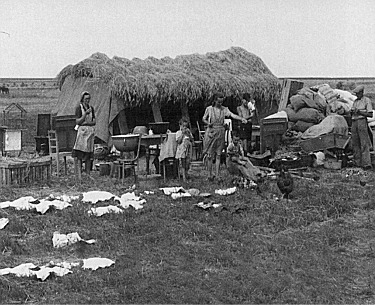
German family deported to a steppe region
Ethnic Germans in Slovakia and Ukraine
German-speaking settlers arrived in the territory of present-day Slovakia from the 12th century onwards, generally at the invitation of Hungarian rulers rather than through military conquest.
Hungarian kings sought settlers — farmers, craftsmen, miners and merchants — to develop sparsely populated northern and eastern regions of the kingdom.
Promises of special rights attracted, among others, the Zipser Saxons, who established communities in northern Slovakia.