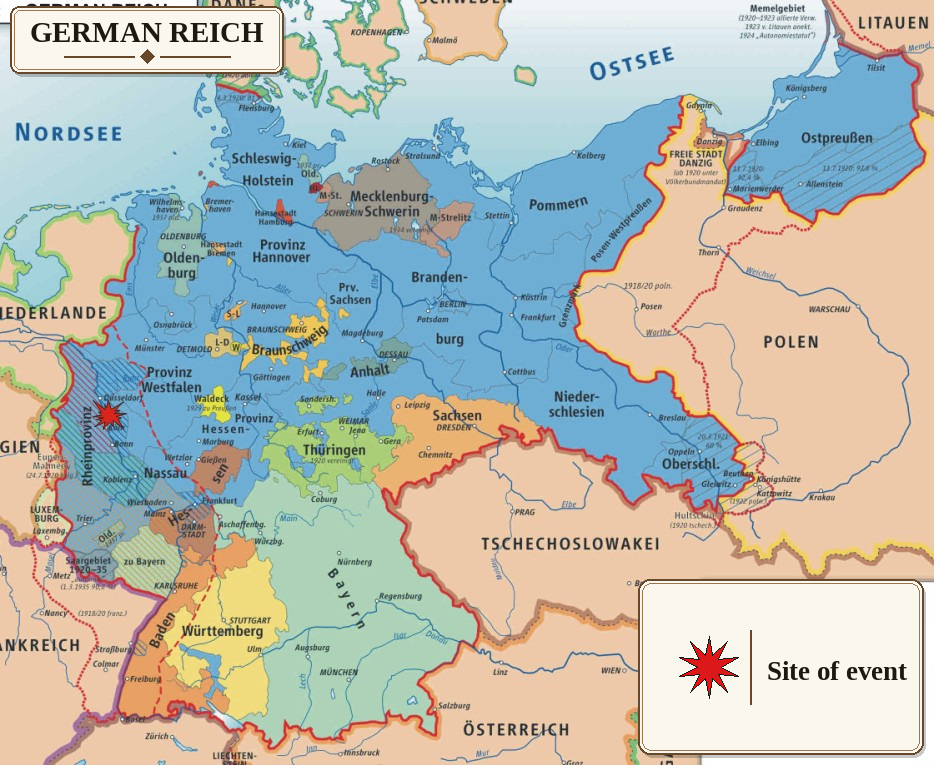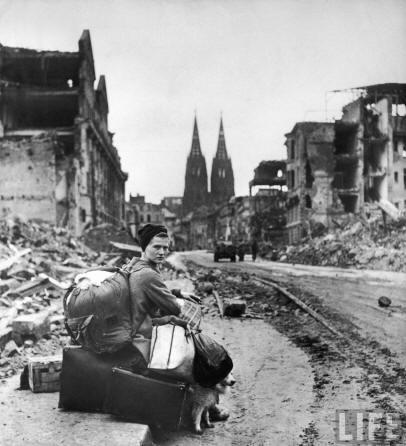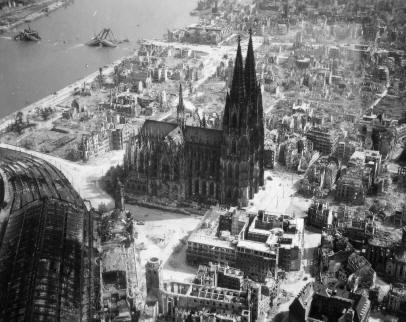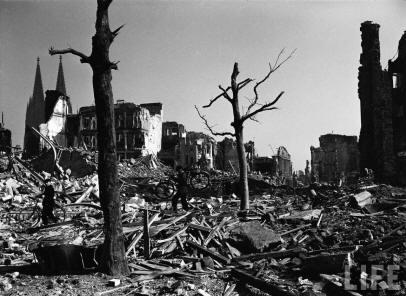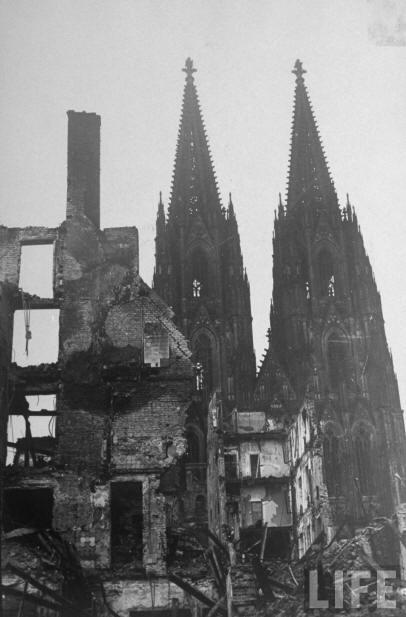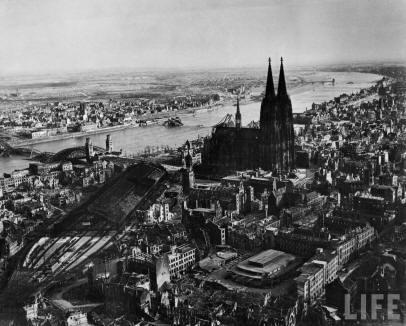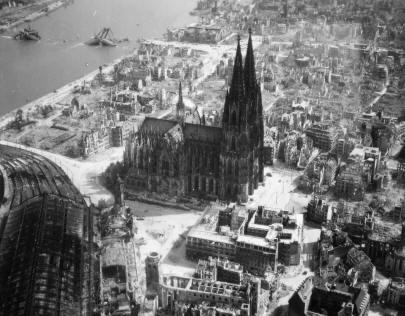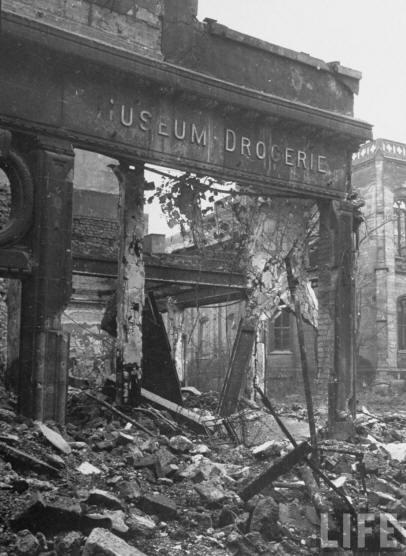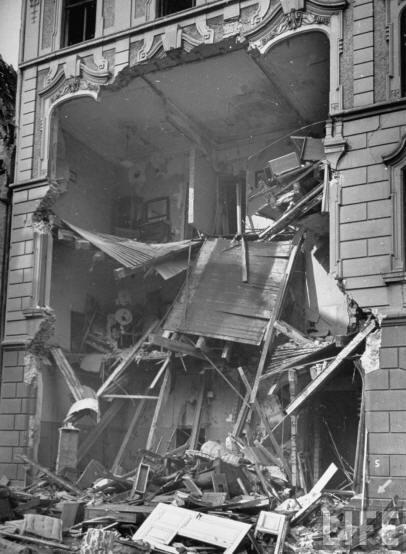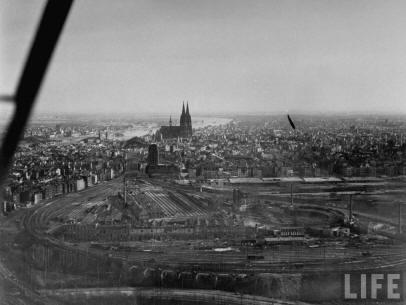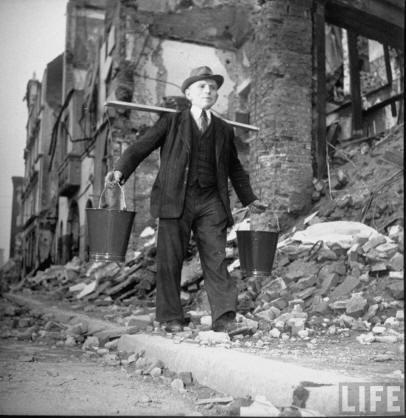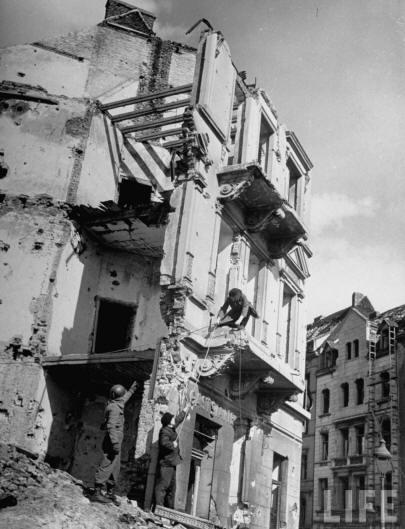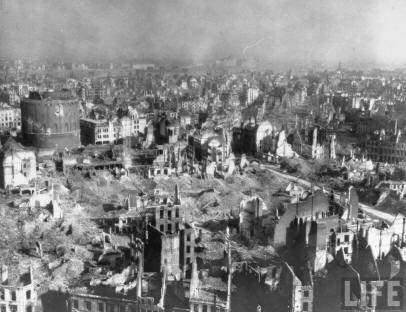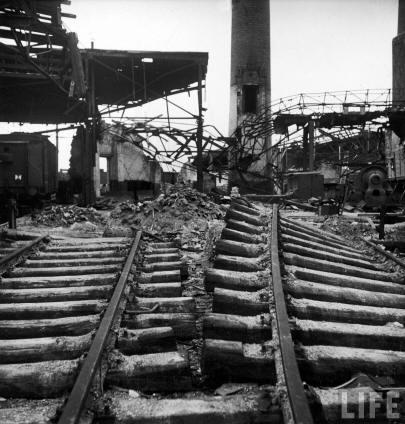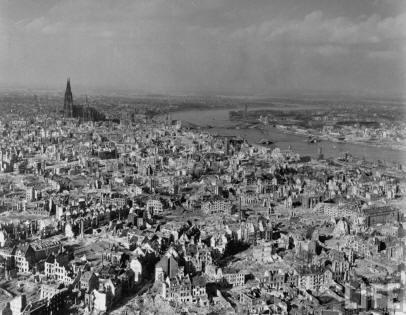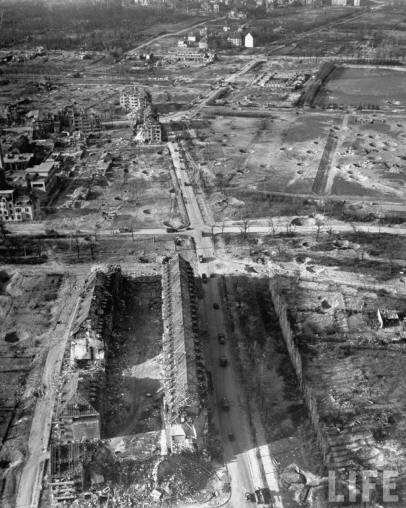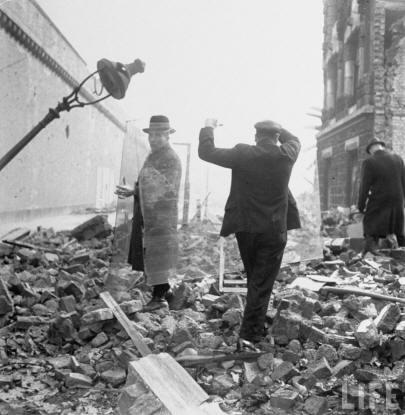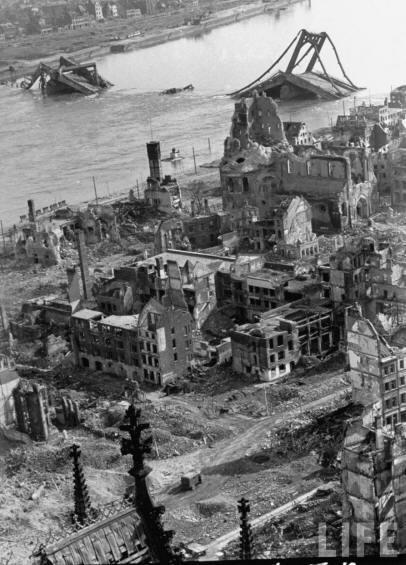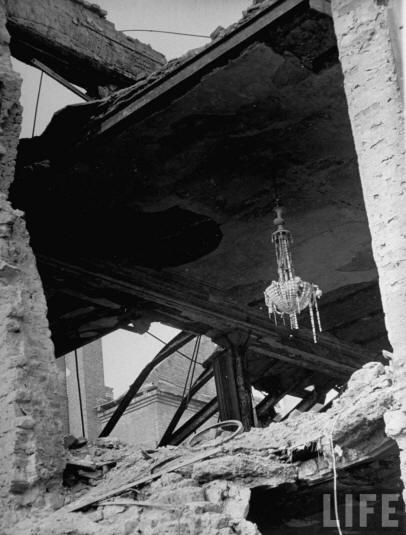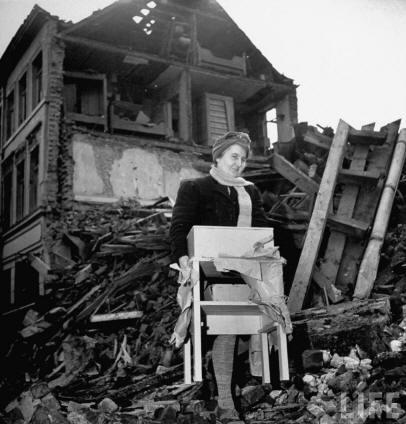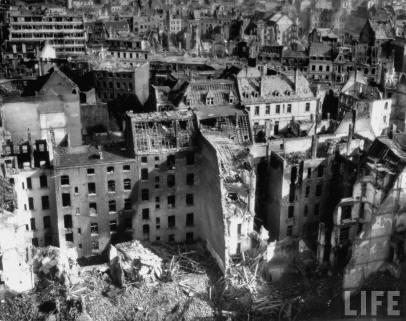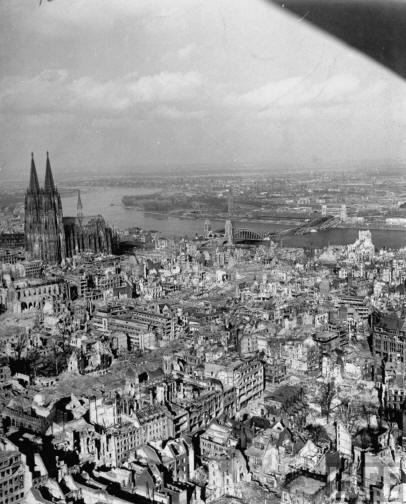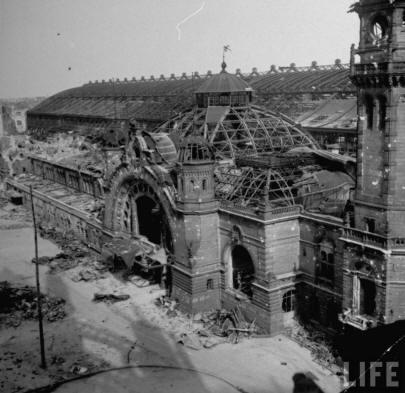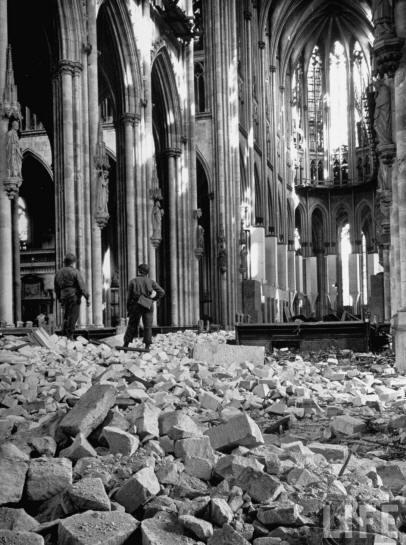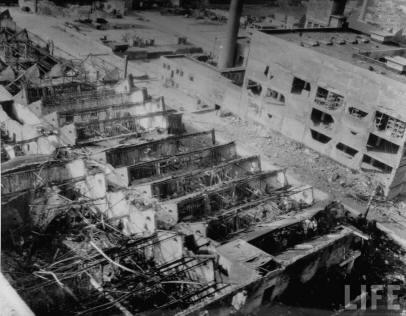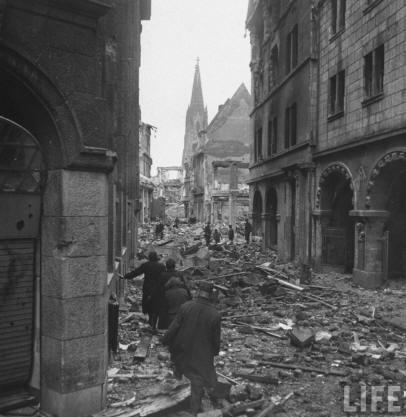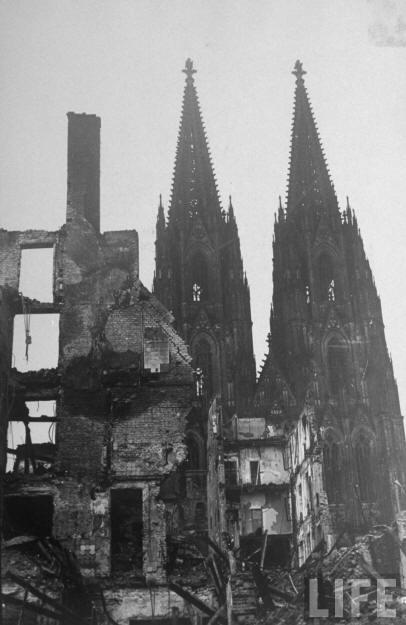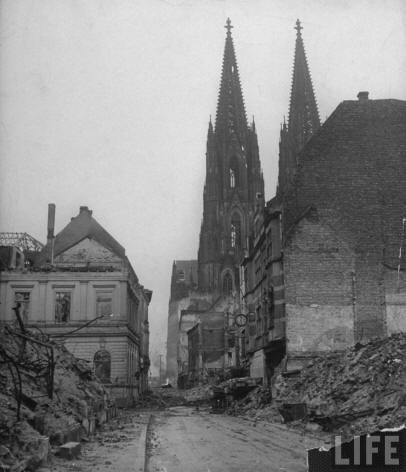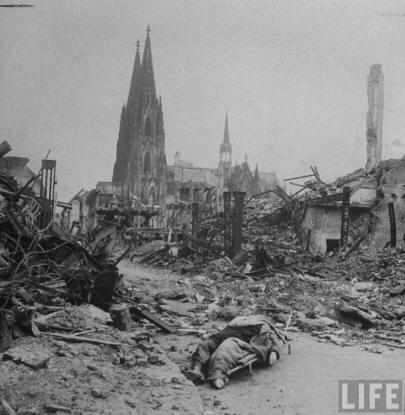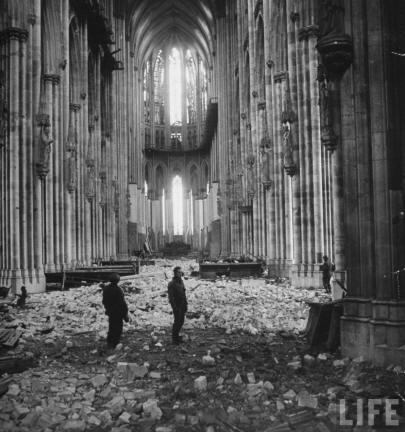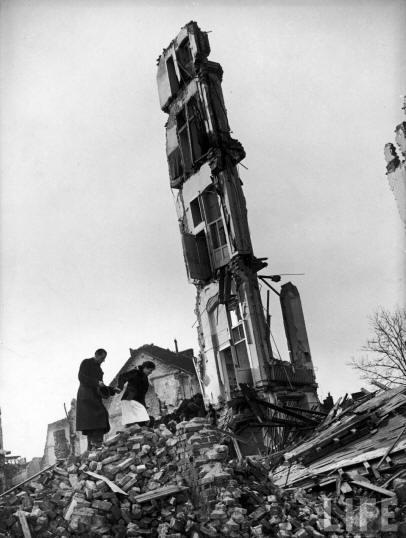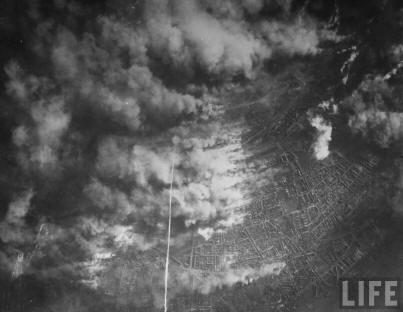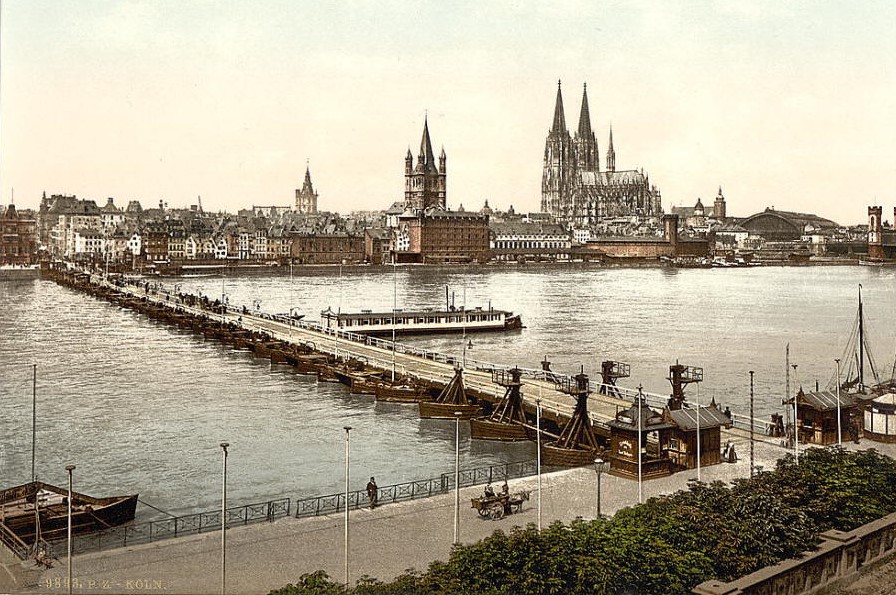
As a major industrial and commercial centre of the German Reich, Cologne was bombed repeatedly.
Because of Cologne’s western location, air raids began very early and were particularly severe on:
2 March 1941,
12 August 1941,
12 December 1941,
14 February 1942,
14 March 1942,
6 April 1942,
30/31 May 1942,
3 February 1943,
15 February 1943,
27 February 1943,
16/17 June 1943,
29 June 1943,
4 July 1943,
9 July 1943,
5 October 1944,
14 October 1944,
27 October 1944,
30 October 1944,
November 1944,
6 January 1945,
2 March 1945.
The raids of 30 and 31 May 1942 were especially severe. With roughly 1,000 bombers, the Royal Air Force employed its new strategy of large-scale area bombing for the first time.
The raid dropped 864 high-explosive bombs, 11,000 incendiary bombs, 20 aerial mines and more than 1,000 phosphorus incendiaries and canisters. These ignited around 12,000 individual fires, which merged into roughly 1,700 larger conflagrations. The heat was so intense that firefighters’ hoses burned before they could reach some of the fires. Crews in following bomber waves could see Cologne’s glow from as far away as the North Sea.
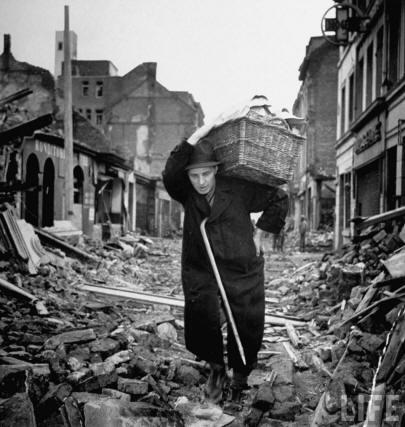
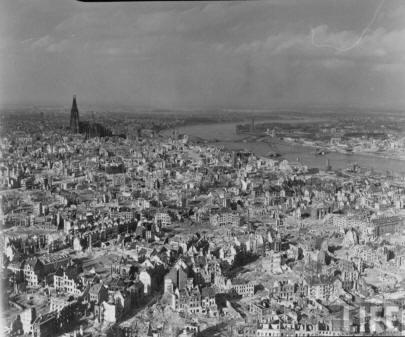
Nearly 500 people were killed in this raid. Many of the dead bore greenish traces of phosphorus on their burned bodies. Entire neighbourhoods were reduced to rubble and ashes, and 14,000 residential and commercial buildings, mainly in the city centre, were destroyed.
20,000 dead
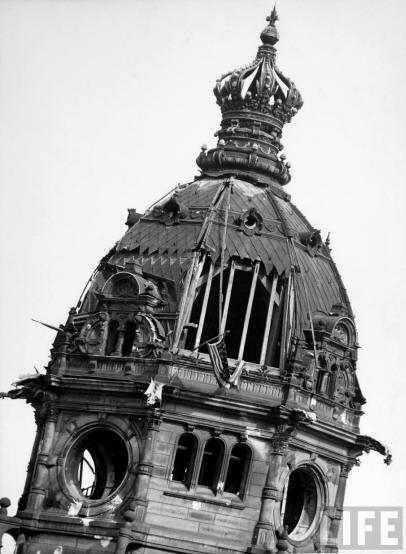
On the night of 28–29 June, around the feast of Saints Peter and Paul, Cologne’s civilian population endured another devastating blow. A vast firestorm engulfed the city; the rising hot air created such powerful suction that breathing became extremely difficult. Some 4,377 people were burned, suffocated or torn apart by explosions. The Town Hall, the Wallraf-Richartz Museum, the Museum of Decorative Arts and the Gürzenich were destroyed. The number of homeless people rose to 230,000.
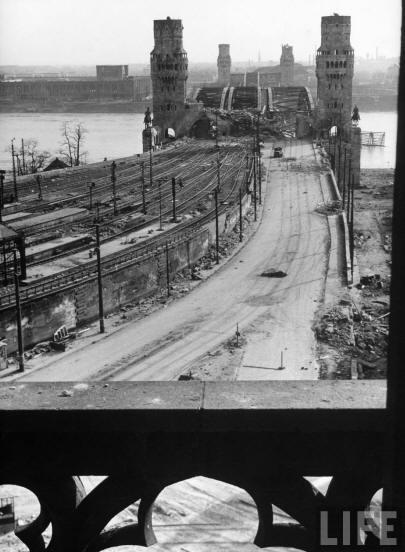
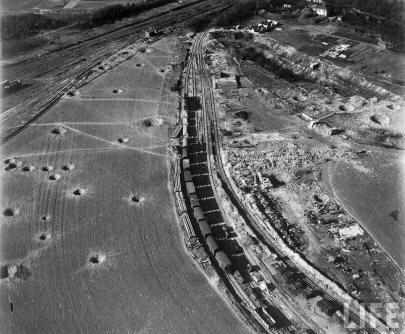
Although much of the city centre and suburbs already lay in ruins, Cologne’s ordeal continued. In 1944, a further 88 air raids were flown against the city. During the so-called transport offensive in the autumn and winter, ports, railway stations and bridges were bombed.
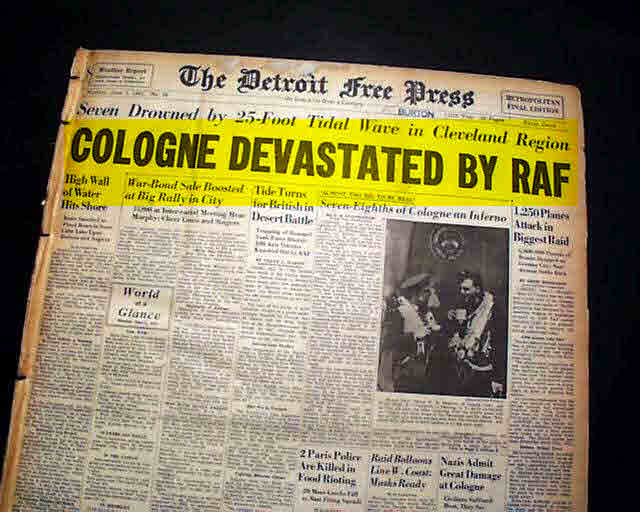
Report of a U.S. newspaper
As an important transport hub with major bridges, Cologne was repeatedly subjected to heavy bombing. The Mülheim Bridge was destroyed on 14 October 1944, the Rodenkirchen Bridge on 14 January 1945 and the Hindenburg Bridge on 28 February 1945.
On 2 March 1945, shortly before U.S. forces entered the city, Cologne was bombed once more. The raid destroyed St George’s Church, one of the last surviving historic churches in the Old Town.
In total, the attacks on the nearly two-thousand-year-old city killed about 20,000 people, predominantly civilians, including around 2,000 children under fourteen and nearly 9,000 women.
German newsreel on the destruction of Cologne Cathedral