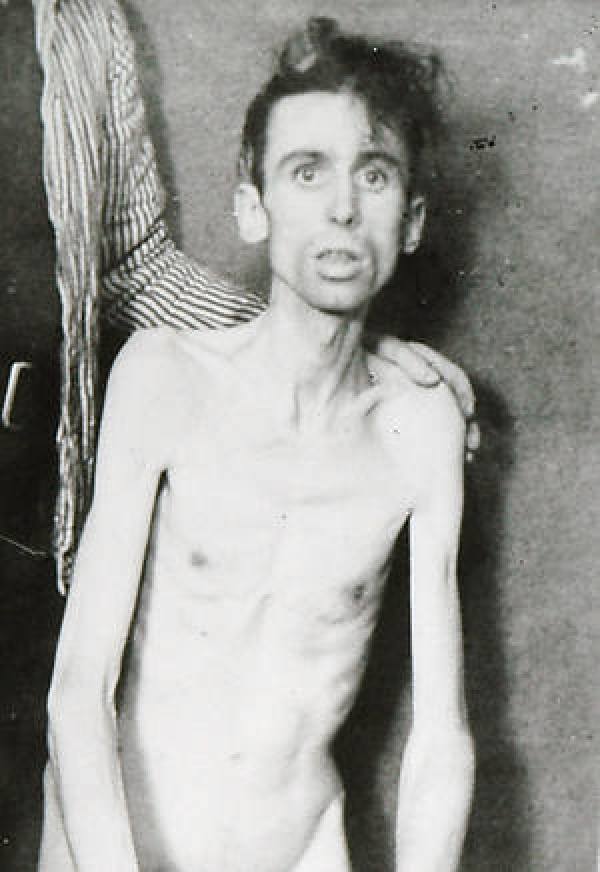
The starved
Until the final days of the war, the food supply still functioned to some extent.
With the occupation of western Germany and the advance of the Red Army in the east, the agricultural supply system changed abruptly.
Farmers and landowners from East Prussia, West Prussia, Pomerania, East Brandenburg and Silesia had fled or been expelled. Fields were left untilled and livestock remained without adequate care. Surviving animals and food stocks were frequently requisitioned by occupying forces.
The bombing had also destroyed much of the infrastructure of Germany’s major cities. Mills, dairies, bakeries, slaughterhouses, food-processing plants and many wholesale and retail businesses lay in ruins. Many skilled workers in the food trades were dead, missing or in captivity.
At the same time as food became scarcer, millions of refugees and displaced people from the eastern territories increased the number of people who had to be supplied.
The text contrasts the later reconstruction policies associated with George Marshall with the earlier ideas of Henry Morgenthau, who advocated the deindustrialisation of Germany. It also states that U.S. Military Governor Lucius Clay initially prevented the Red Cross from distributing two large food shipments to German civilians, quoting the remark: “The Germans should suffer!”
The Canadian author James Bacque argued, on the basis of Soviet and Allied sources, that as many as five million German civilians died after the war in the Allied occupation zones from the effects of malnutrition. This figure is presented here as Bacque’s conclusion.
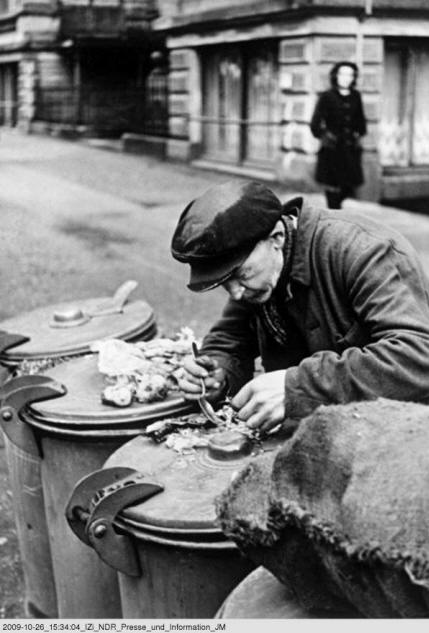
The frozen
The wartime destruction affected not only food production but also much of the country’s energy and transport infrastructure.
Roads, canals, railways, bridges, stations, marshalling yards, locomotives, railway wagons, lorries and ships had suffered extensive damage.
Dams, waterworks, heating plants, power stations, substations and transmission networks had also been damaged or destroyed.
Many people lived in huts, makeshift shelters, ruins and draughty cellars. This was followed by an exceptionally cold winter.
While people struggled with hunger and cold, raw materials and fuels such as iron, timber and coal were shipped abroad, and industrial equipment was dismantled or removed.
In many ruined districts there was little combustible material left after the firestorms. Hospitals, pharmaceutical companies and pharmacies had also been damaged. Elderly, sick and weakened people were particularly vulnerable to malnutrition, dehydration, hypothermia and deficiency diseases. A shortage of medicines, severe overcrowding and inadequate sanitation contributed to tuberculosis, typhoid, rickets and diphtheria, while lice and other parasites were widespread.
Many elderly and sick people died from exposure. Weakened by hunger and exhaustion, some fell asleep in unheated homes and never woke again.