At the end of February 1942, Sir Arthur Harris became Commander-in-Chief of RAF Bomber Command. Soon afterwards, the new policy of area bombing German cities was put into practice on a large scale.
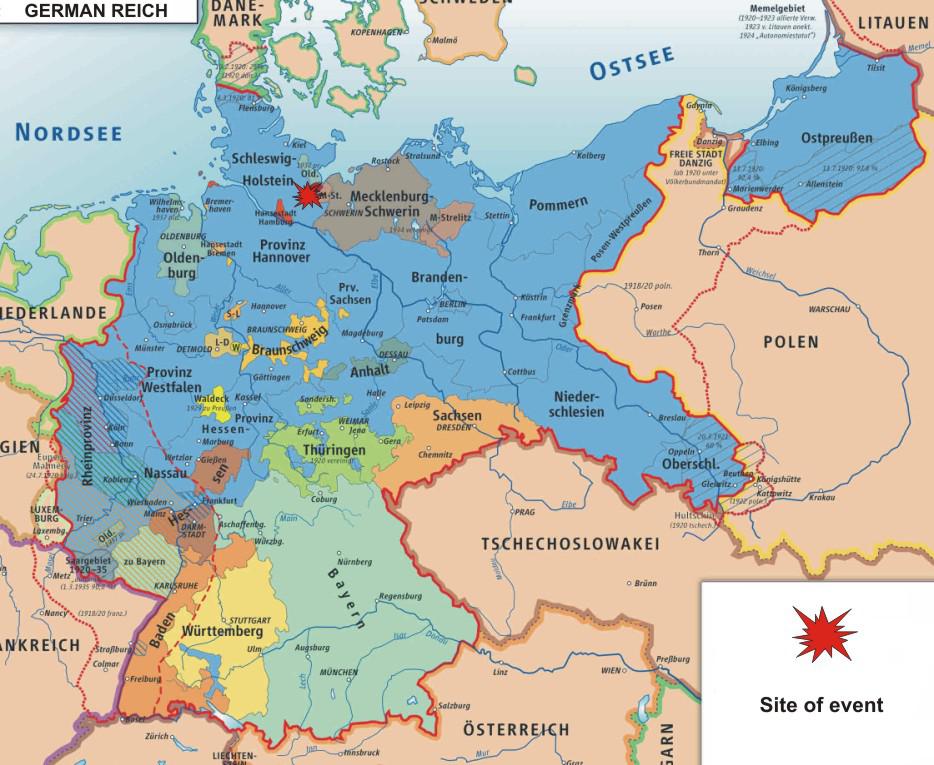
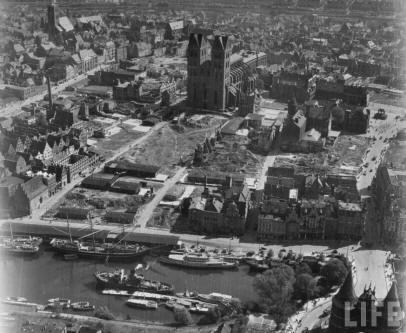
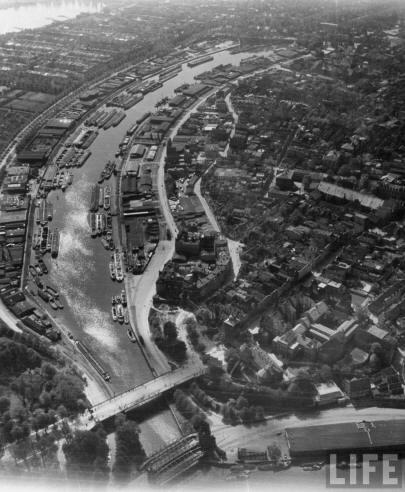
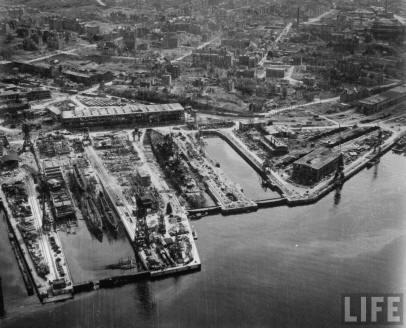
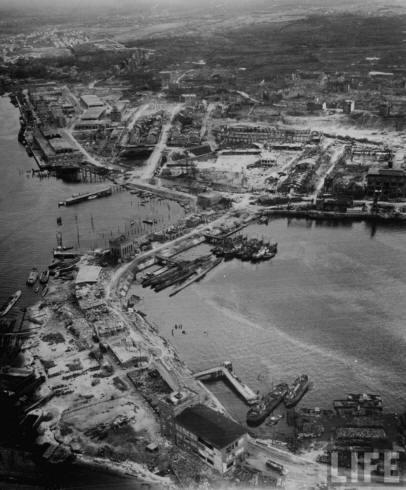
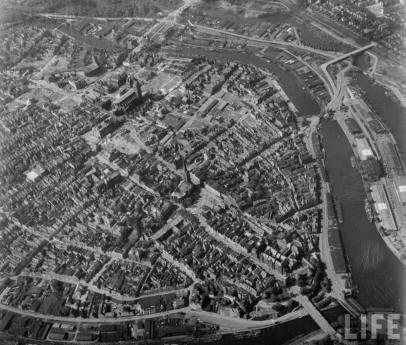
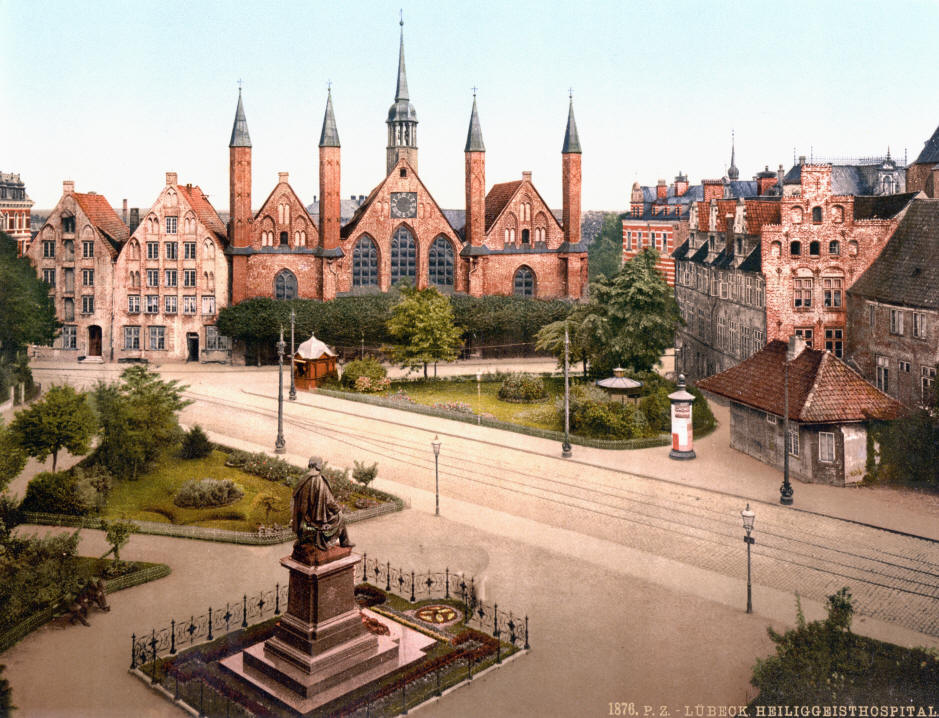
The historic Hanseatic city of Lübeck, with its dense medieval centre and important cultural monuments, became one of the first major test cases for large-scale incendiary area bombing.
On the night of 28–29 March 1942, 234 British bombers dropped high-explosive bombs followed by incendiaries, with a total bomb load of about 304 tons.
The resulting fires engulfed 1,425 buildings. About 62 per cent of the city’s houses were destroyed or damaged.
Around 320 civilians were killed, many by fire and smoke inhalation.
Irreplaceable historic and cultural buildings were lost in the fires.
The combination of high-explosive and incendiary bombing used at Lübeck was later employed on a much larger scale in Hamburg, Dresden and other cities.
German newsreel report on the bombing of Lübeck